

Remarketing: How to Win Back Customers Who Did Not Buy
A typical online store loses the vast majority of people who land on it. Someone clicks an ad, views a product, adds it to the cart and then disappears. Not because the offer is bad. They simply got distracted by a conversation, a phone call, the shipping cost or a plain “I’ll think about it”. The average cart abandonment rate is about 70 percent, and on mobile devices it reaches 85.65 percent versus 73.07 percent on desktop. That is not a margin of error. It is the main part of your traffic, which you have already paid for.
Remarketing (also called retargeting) is a way to reach those people again with a relevant message, instead of paying all over again to acquire completely new audiences. In this article we show how it works in practice, which channels make sense for a small business and why today the foundation of effective remarketing is first-party data, not third-party cookies.
What remarketing is and why it works
Remarketing means showing ads to people who have already interacted with your brand: they visited your site, viewed a product, signed up for your newsletter or started placing an order. Instead of speaking to a random crowd, you speak to people who have shown real interest. The difference in effectiveness is clear and you can see it in the numbers.
Remarketing ads in the display network achieve a click-through rate (CTR) of 0.7 percent versus 0.07 percent for ads to new audiences, roughly ten times higher. The reason is simple: you remind someone of something they were already considering, rather than interrupting them with a completely unfamiliar message. Remarketing does not create a need from scratch, it closes a decision that was already in progress.
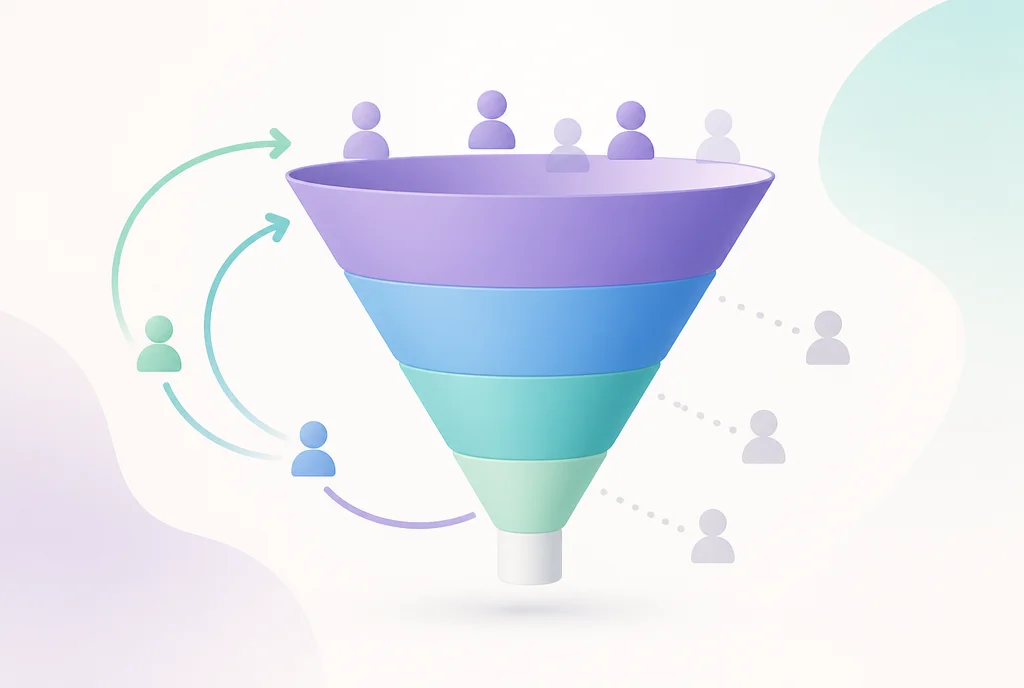
It is worth putting this in the right context right away. Remarketing does not replace acquiring new customers, it rescues its results. If you look at your communication as a sales funnel, remarketing is the mechanism that catches people dropping out of the funnel at the middle and bottom stages, and brings them back to checkout.
How much you really lose and how much you can recover
Before you spend a single złoty on a campaign, it is worth seeing the scale of the phenomenon in numbers. The table below compares typical results of ads to new audiences with remarketing results. These are approximate values that depend on the industry, product price and creative quality, but the direction is consistent.
| Metric | New audiences | Remarketing |
|---|---|---|
| Conversion rate (CVR) | 1.5 to 2.2 percent | about 3.8 percent |
| Return on ad spend (ROAS) | 1.8 to 2.2x | about 4.2x |
| Cost per acquisition (CPA) | baseline | 40 to 70 percent lower |
| Click-through rate in the display network | 0.07 percent | 0.7 percent |
It is clear that remarketing is not just a decoration. According to industry data it achieves a conversion rate of about 3.8 percent and a return on ad spend of 4.2x, with a cost per acquisition 40 to 70 percent lower than in campaigns to cold audiences. For a shop owner this means one thing: the same złoty works harder, because it reaches people closer to a decision. This is also why remarketing is often the most cost-effective first step on a modest budget.
Segmentation: not every visitor is the same
The most common mistake small businesses make is one remarketing campaign for everyone who visited the site. Someone who glanced at a blog for three seconds and someone who left a full cart are two different worlds. Effective remarketing starts with dividing your audience into groups based on how far they got.
- Abandoned cart or started order: the warmest group. They know the price, they know the product, only the last step was missing. Here a reminder about the specific product and a simple incentive work most powerfully.
- Product browsers: they viewed product pages but did not add anything to the cart. It is worth showing them exactly what they looked at, along with the reasons to buy specifically from you.
- Content visitors: they read an article or landed on the homepage. This is the coldest group, so send them a lighter, trust-building message rather than a hard offer.
- Existing customers: a separate list for upselling and repeat purchases, but also to exclude from acquisition campaigns, so you do not pay to reach someone who has already bought.
This split is based on audience lists that you build from traffic on your own site, for example through Meta Custom Audiences or Google Display Remarketing. The cleaner the segmentation, the more relevant the message and the less money you waste on messages aimed at the wrong people. Frequency capping also helps, so the same person does not see your ad twenty times a day and start associating your brand with annoyance.
Recovery channels: ads are not everything
Remarketing is often associated with banners “chasing” you around the internet, but that is just one channel. The best results come from combining several touchpoints, matched to where the person left their data.
Ads in the display network and social media
The classics: display ads in the Google Display network and Facebook and Instagram campaigns aimed at remarketing lists. The key quality difference is dynamic ads (Dynamic Product Ads), which automatically show the specific products a given person viewed. Dynamic product ads generate on average 34 percent more conversions than static ads, because the viewer sees exactly the shoe model they abandoned, not a generic brand banner. If you are just getting started with Meta, it is worth building on the basics described in our guide to effective Facebook and Instagram ads.
Search remarketing (RLSA)
RLSA (Remarketing Lists for Search Ads) is an often overlooked yet very cost-effective technique. It lets you raise bids and tailor your message when someone who has already been on your site searches on Google again. The same person typing a product query a second time is much closer to buying. The data shows that RLSA achieves a click-through rate of 5.2 percent, 37 percent higher, with a cost per click 15 to 22 percent lower. If you run search campaigns, it is worth combining them with remarketing lists, and we explain how to set this up in our guide to Google Ads for beginners.
Email, SMS and WhatsApp
If someone left an email address or phone number, you have a channel with no cost per click and no dependence on cookies. An abandoned cart message sent by email is the basics, but it is worth looking wider. Timing is key here: the first reminder is best sent within an hour of the abandonment, while the purchase intent is still fresh, and the next ones spread over the following days. Mobile channels have a much higher open rate: WhatsApp achieves 95 to 98 percent opens versus 20 to 30 percent for email in cart recovery scenarios. This does not mean email is weak, it is still the cheapest and most scalable channel, but it is smart to combine both. How to build sales-saving sequences is something we describe in our articles on email marketing for small businesses and on marketing automation for small businesses, where these messages go out automatically once a condition is met.
The twilight of cookies: why first-party data matters
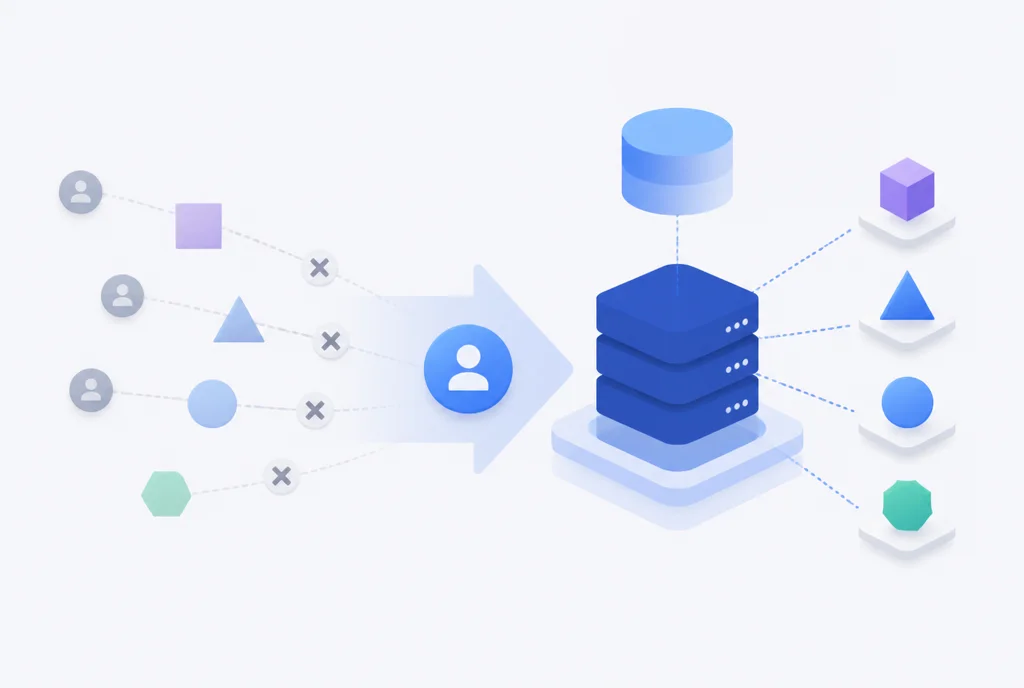
For years remarketing relied on third-party cookies that tracked users across sites. That mechanism is coming to an end: browsers block such cookies and regulations require consent. In the European Union the real rate of consent to tracking is about 55.7 percent, which shifts the weight onto first-party data, the information you collect directly on your own site with the user's consent. This is what becomes the most valuable marketing asset a small business has.
The practical response to this change has two layers. The first is server-side tracking, for example through Server-Side Google Tag Manager and interfaces such as Meta CAPI (Conversions API). Instead of relying solely on browser code, you send event data from the server, which is more resistant to blocking. This approach lets you recover 10 to 25 percent of the lost signal, and 52 percent of marketers already use it. The second layer is Consent Mode v2, which means correctly passing along consent information, and building your own contact databases that no one can take away from you.
Consent and privacy: a foundation, not an add-on
Remarketing involves personal data, so legal compliance is not optional. Collect consent unambiguously before you start tracking, and respect the choice of people who did not agree. Build your email and SMS databases on real marketing consent, not on purchased lists. This is not only about avoiding a fine. First-party data collected honestly is simply more effective, because it comes from people who genuinely want to be in touch with you. Paradoxically, the post-cookie world rewards companies that build a real relationship, not those that track most cleverly.
How to start in a small business
You do not have to implement everything at once. A sensible order for a shop or a service business looks like this:
- Install proper tracking with consent handling and, if possible, a server-side layer.
- Build the basic audience lists: abandoned cart, product browsers, existing customers.
- Launch one dynamic campaign for abandoned carts, because that is the warmest group with the fastest return.
- Add an email and SMS abandoned cart sequence so you do not depend on ads alone.
- Only then expand to RLSA, content remarketing and upselling to existing customers.
Remember that remarketing amplifies what you already have. If your landing page does not convince, no ad will fix that, which is why it is worth taking care, in parallel, of an effective landing page, to which you bring the recovered traffic. Ads bring a person back a second time, but it is the page that closes the sale. So treat remarketing not as a separate trick, but as a natural extension of the entire buying journey, from the first click all the way to the return to the cart.
Frequently asked questions
How does remarketing differ from retargeting?
In practice, they are synonyms. Historically, “retargeting” more often referred to cookie-based display ads, and “remarketing” to broader activities, including email. Today both words describe the same thing: reaching people who have already interacted with the brand.
Does remarketing make sense on a small budget?
Yes, especially so. Because the cost per acquisition in remarketing is often 40 to 70 percent lower, a small business recovers more sales from the same traffic, instead of burning through its budget on constantly acquiring new, cold audiences. It is one of the most cost-effective starting points.
Is remarketing without third-party cookies still possible?
Yes. It relies on first-party data, server-side tracking and consent-based channels such as email, SMS and WhatsApp. This approach is more resistant to blocking and compliant with regulations, and often more effective than the old cookie-based model.
How do you avoid the impression that your ads are “stalking” people?
Set frequency capping, exclude people who have already bought, and end the campaign after a reasonable time window, for example several or a dozen or so days. Well-run remarketing reminds, it does not hound.